
Last updated November 18, 2026
 Impact garage doors
 Single hung
 Double hung
 Horizontal roller
 Casement
 Bay & bow
 Sliding glass doors
 Entry doors
 PGT
 CGI
Free in-home measure and quote - PGT, CGI and CWS impact lines compared on your actual openings, style by style
Get your free estimateImpact Windows Maintenance Checklist for Whitney Homeowners
Impact windows can withstand 150 mph winds, but a $3 tube of the wrong silicone sealant applied by a well-meaning homeowner can void the manufacturer’s warranty on a $600 unit. That gap between how tough these windows are sold and how carefully they need to be cared for is where most Whitney homeowners get into trouble. Impact-rated glass is built to take a beating from weather, not from chemistry experiments in the driveway. What follows is the maintenance routine we walk homeowners through: roughly 90 minutes a year of small, specific habits that protect the warranty, catch seal failures early, and get a full 30 years out of a window that too often quits at 15.
Quick Answer
A complete impact window maintenance routine for a Whitney home takes about 90 minutes spread across the year: a quarterly 10-minute inspection of seals and glazing, a twice-yearly cleaning with mild soap and water only, hardware lubrication every six months, and an annual check of the frame-to-wall junctions. Never use ammonia-based glass cleaners or abrasive pads on impact glass, and leave any resealing of the frame-to-rough-opening junction to a licensed installer so you don’t void the manufacturer’s warranty.
Styles & brands we work with
- Single hung
- Double hung
- Horizontal roller
- Casement
- Bay & bow
- Sliding glass doors
- Entry doors
- Impact garage doors
- PGT
- CGI
Table of Contents
- Why Impact Windows Need Maintenance at All
- The Right (and Wrong) Cleaning Products for Desert Sun
- How Whitney’s Windblown Grit Wears on Seals
- Hardware Lubrication in Low-Humidity, High-Dust Air
- How to Test Whether a Sealed Unit Is Still Performing
- What You Can Do Yourself vs. What Needs a Licensed Installer
- Your Seasonal Maintenance Calendar
- Common Mistakes to Avoid
Why Impact Windows Need Maintenance at All
Impact windows are sold on toughness, and that’s fair – the laminated glass and reinforced frames genuinely hold up to flying debris and hurricane-force gusts. But toughness isn’t the same as maintenance-free, and treating it that way is exactly how a window rated for 30 years quietly checks out at 15. The parts that fail first are rarely the glass itself. They’re the seals, the gaskets, the weatherstripping, and the hardware – the softer components that degrade from sun, dust, and time.
Here in Whitney, that degradation happens faster than in most of the country. The Las Vegas Valley sees intense UV exposure for most of the year, summer temperatures that regularly push past 110°F, and a dry, gritty wind that carries fine desert dust against every exterior surface. Add the seasonal monsoon gusts that blow sand and grit sideways, and you’ve got an environment that’s hard on anything rubber or plastic on the outside of a house.
There’s a warranty angle too. Manufacturers like PGT and CGI build their coverage around the assumption that the window is maintained according to their published guidelines. Use the wrong cleaner, scrape the frame with a razor, or slather the wrong sealant on a joint, and you can give them a legitimate reason to deny a claim on a unit that should have been covered. We’ve seen homeowners unknowingly do this, then call us frustrated when a warranty replacement gets pushed back.
The good news: the routine that keeps everything under warranty is short. Think of it as 90 minutes spread across four seasons, not a weekend project. That’s the reframe – maintenance isn’t a burden, it’s a habit that protects a five-figure investment. If you want the full picture on what these windows are built to do, our Impact Windows in Whitney page covers the ratings and construction in detail.
The Right (and Wrong) Cleaning Products for Desert Sun
This is where more impact windows get damaged than anywhere else – not by weather, but by the stuff under the kitchen sink. Impact glass and its frame coatings are engineered for UV resistance, but they aren’t engineered for harsh chemicals, and Whitney’s relentless sun makes the consequences show up faster.
Products that degrade PGT and CGI frame coatings
The frame finish on a premium impact window is a coating, and coatings are vulnerable to solvents and abrasives. In our experience, the offenders fall into a few categories:
- Ammonia-based glass cleaners (the classic blue sprays). Ammonia can attack the laminated interlayer edges and the frame finish over repeated use.
- Abrasive cleansers and scouring pads. These scratch the frame coating and the low-E film inside the glass. Micro-scratches become hazy fast under desert sun.
- Solvent-heavy or acid-based cleaners meant for tile or concrete. They eat into the finish and the weatherstripping.
- Razor blades and putty knives on the frame. People use them to scrape off paint flecks and hardened dust. They gouge the coating.
What actually works
Mild dish soap, warm water, a soft microfiber cloth, and a squeegee for the glass. That’s it. Rinse thoroughly so no soap residue cooks onto the surface in the sun. For frames on the newer CWS and ES Windows products we install, the same rule applies – the coating wants gentle soap and water, nothing stronger. One specific tip for Whitney: clean glass in the early morning or late evening, not midday. Water and soap dry too fast on hot glass and leave streaks you’ll chase for an hour.
One more thing worth knowing. If you’ve got a salt-air or pool-chemical exposure on top of the desert sun, the rinse-and-dry step matters even more. Residual mineral deposits bake into the finish and dull it permanently over a summer. A quick rinse after a pool party costs you 30 seconds and saves the coating.
How Whitney’s Windblown Grit Wears on Seals
The dust that blows across Whitney doesn’t just look bad on your windows – it’s an abrasive, and it works on the softest parts of the unit. Every time a spring wind picks up fine sand and drives it against the glazing seals and weatherstripping, tiny particles embed in the rubber and slowly grind it down. It happens so gradually that most homeowners never notice until the seal has failed completely.
That’s why the quarterly inspection matters so much. Ten minutes going around the house, four times a year, catches the early signs before they become a real repair.
Your 10-minute quarterly inspection
- Wipe the seal edges. Run a damp microfiber cloth along the glazing seal (where the glass meets the frame) to remove embedded grit. Don’t rub hard – lift it off gently.
- Look for cracking or shrinkage. Rubber weatherstripping dries out in low humidity. Check for hairline cracks, gaps, or sections that have pulled back from the frame.
- Check for gaps at the corners. Corners are where seals separate first. Look closely at each corner of every sash.
- Test the seal with a light touch. If the rubber feels brittle or hard instead of pliable, it’s aging faster than it should.
- Note anything that looks worn and get it addressed before monsoon season – that’s when the wind and rain test it all at once.
Here’s the payoff. Catching a worn glazing seal during a 10-minute inspection is a cheap fix. Letting it go until the seal completely fails and water gets behind it can turn into a $400 reglazing job, sometimes more depending on the unit. For homeowners who want to understand the difference between a seal issue and a full-unit issue, our Window Replacement in Whitney page covers when replacement makes more sense than repair.
Hardware Lubrication in Low-Humidity, High-Dust Air
Impact window hardware – the locking mechanisms, the hinges, the tracks on sliders – lives a tough life in Whitney. The air is dry most of the year, which pulls the lubricant out of moving parts, and the dust settles into every crevice. The combination means hardware that should glide for a decade starts sticking within a couple of years if it’s ignored.
A sticking lock isn’t just annoying. It’s a security concern when a window can’t be fully latched, and forcing a stiff lock can bend the mechanism or strip the cam. We get calls about windows that “won’t latch right” that turn out to be nothing more than dried-out hardware that needed a two-minute lube job.
Twice-yearly lubricating routine
- Clean first, then lubricate. Blow or brush out dust from the tracks and around the locking points. Lubricant on top of grit just makes grinding paste.
- Use a dry-film or silicone-based lubricant on hinges and locking mechanisms. Avoid heavy grease, which traps dust and gums up in the dry air.
- Work the hardware after lubricating. Open and close, latch and unlatch, several times so the lubricant reaches the full range of motion.
- Wipe away excess. A thin film is right. Excess collects dust and defeats the purpose.
- Test every lock. Confirm each window latches fully – if it doesn’t, that’s a repair item, not a lubrication item.
Twice a year is enough: once in spring before the hot season and once in fall. If you have sliders or patio doors, the tracks need the same treatment. Our Window Installation in Whitney page has more on slider and patio door hardware if you’re working through those too. For the bigger picture of how your windows fit into your home’s overall exterior protection, our Winslow Windows & Doors Whitney home page is a good starting point.
How to Test Whether a Sealed Unit Is Still Performing
Most impact windows are dual-pane, with a sealed air or gas space between the two panes. That sealed space is what gives the unit its insulation value, and when the seal fails, the window quietly stops doing one of its main jobs. The tricky part is that seal failures don’t announce themselves – you have to know what to look for.
There are two tests worth knowing, and they catch different things.
The fog test
This catches moisture between the panes. Look at each window on a cool morning or after a temperature swing. If you see fog, haze, or water droplets between the glass layers – not on the room-side or outside surface – the seal has failed and moist air has gotten in. Wipe the inside and outside of the glass first; if the fog remains and it’s clearly sandwiched between the panes, that’s a failed seal.
The condensation pattern test
This is more subtle and catches failures the fog test misses. On a cold morning, condensation should form evenly across the glass. If the glass is dual-pane and performing well, the room-side surface may show condensation while the space between stays clear. When you see patchy, uneven, or streaky condensation patterns – or condensation forming between the panes only in one corner – that can indicate a seal breach that hasn’t fully fogged yet.
Here’s the Whitney-specific catch. Because our air is so dry, condensation is rare for most of the year, so the fog test only really works during the cooler, damper months. The other tell is thermal: a failed unit feels noticeably hotter on the interior glass during summer than its neighbors. If you stand near a window on a July afternoon and feel heat radiating that the adjacent window doesn’t produce, that’s worth a professional look.
Early detection is the whole point. A failed sealed unit caught early is a straightforward replacement under warranty in many cases. Caught years late, after the desiccant is saturated and the coating has degraded, you’re looking at a full unit replacement out of pocket. We’ve seen homeowners miss this for a decade and pay for it.
What You Can Do Yourself vs. What Needs a Licensed Installer
Here’s the line that protects your warranty. Some maintenance is safe and expected for homeowners to handle. Other tasks can void coverage if done wrong, or cause damage that costs far more than the money you saved. Knowing which is which is half the battle.
Owner-safe maintenance
- Washing glass and frames with mild soap and water
- Wiping grit from glazing seals
- Cleaning and lubricating hardware
- Visual inspection for cracks, gaps, and fogging
- Cleaning slider tracks and patio door tracks
Leave these to a licensed installer
- Resealing the frame-to-rough-opening junction. This is the seal where the window frame meets the wall structure. It’s a critical weather barrier, and using the wrong sealant – or applying it wrong – can trap moisture, void the warranty, and create water intrusion problems. This is the single most common DIY mistake we see.
- Replacing failed sealed units. Dual-pane replacement requires the right glass, the right glazing, and proper sealing. Not a homeowner job.
- Adjusting or repairing the frame itself. Frame modifications can compromise the impact rating and the structural warranty.
- Any hardware replacement. Impact-rated hardware is matched to the unit’s specifications. Generic replacements can affect performance and coverage.
The resealing point deserves emphasis because it’s where we see the most damage. A homeowner notices a small gap, grabs a tube of silicone from the hardware store, and fills it. If it’s the wrong formulation or the surface wasn’t prepped properly, moisture gets trapped behind the seal and works its way in. When it fails, the manufacturer has a legitimate reason to say the failure came from improper sealant. That’s how a $3 tube costs you a warranty. The professional doing this work should be licensed and insured as the state requires, and they’ll use the correct product for your specific frame material and brand.
If you’re not sure whether an issue is owner-safe or installer territory, call and ask. We’d rather talk you through a 30-second inspection than have you guess and get it wrong. Winslow Windows & Doors Whitney has been handling this work locally, and our technicians have up to 15 years of experience with exactly these products.
Your Seasonal Maintenance Calendar
The whole routine works best if you spread it across the year rather than trying to do it all at once. Here’s how we’d schedule it for a Whitney home, matching the seasons to the tasks they suit.
- Spring (before the heat): Clean all glass and frames with mild soap and water. Lubricate every lock and hinge. Do a full 10-minute-per-window grit inspection. This is also the time to check seals ahead of monsoon season.
- Early summer: Run the fog test and the thermal check on the hottest afternoons – a failed unit is easiest to spot when the heat difference is sharp. Look for any condensation issues developing.
- Late summer / monsoon season: Watch for water intrusion at the frame-to-wall junction after heavy rain. Check that all locks are latching securely. Note any new gaps.
- Fall: Second lubrication of the year. Clean out slider and patio door tracks. Re-inspect seals after the summer grit exposure. This is the season to schedule any professional resealing before the cooler months.
- Winter: Fog test again during the damper months when condensation actually forms. Check weatherstripping for dryness and cracking from the low humidity. Clean and ready everything for the spring.
Total time: roughly 90 minutes spread across the year, plus one cleaning session. That’s less time than a single grocery run. The habit protects a 30-year window and keeps you within warranty, which is a trade any homeowner should make.
Common Mistakes to Avoid
- Using ammonia-based glass cleaner. The blue sprays are everywhere and they’re the wrong choice for impact glass and frame coatings under desert sun. Stick with mild soap and water.
- DIY resealing the frame-to-wall junction. The most expensive mistake we see in Whitney. The wrong sealant on the wrong surface can trap moisture and void the warranty on a unit that was perfectly fine.
- Scraping the frame with a razor blade. A quick way to gouge the coating. Micro-scratches haze over fast in the Whitney sun and can’t be repaired.
- Ignoring dried-out weatherstripping. Low humidity shrinks and cracks rubber. Catching it during a quarterly inspection is cheap; catching it after it fails in a monsoon is not.
- Lubricating over dust. Cleaning is the first step every time. Lubricant applied on top of grit just grinds the hardware faster.
- Skipping the fog test in dry months. Whitney’s air is dry most of the year, so condensation is rare. Run the thermal check in summer instead of waiting for fog that won’t come.
- Assuming “impact” means “maintenance-free.” The glass is tough, but the seals, gaskets, and hardware still age. This one assumption is what shortens a 30-year window to 15.
See the difference
 Before
 After
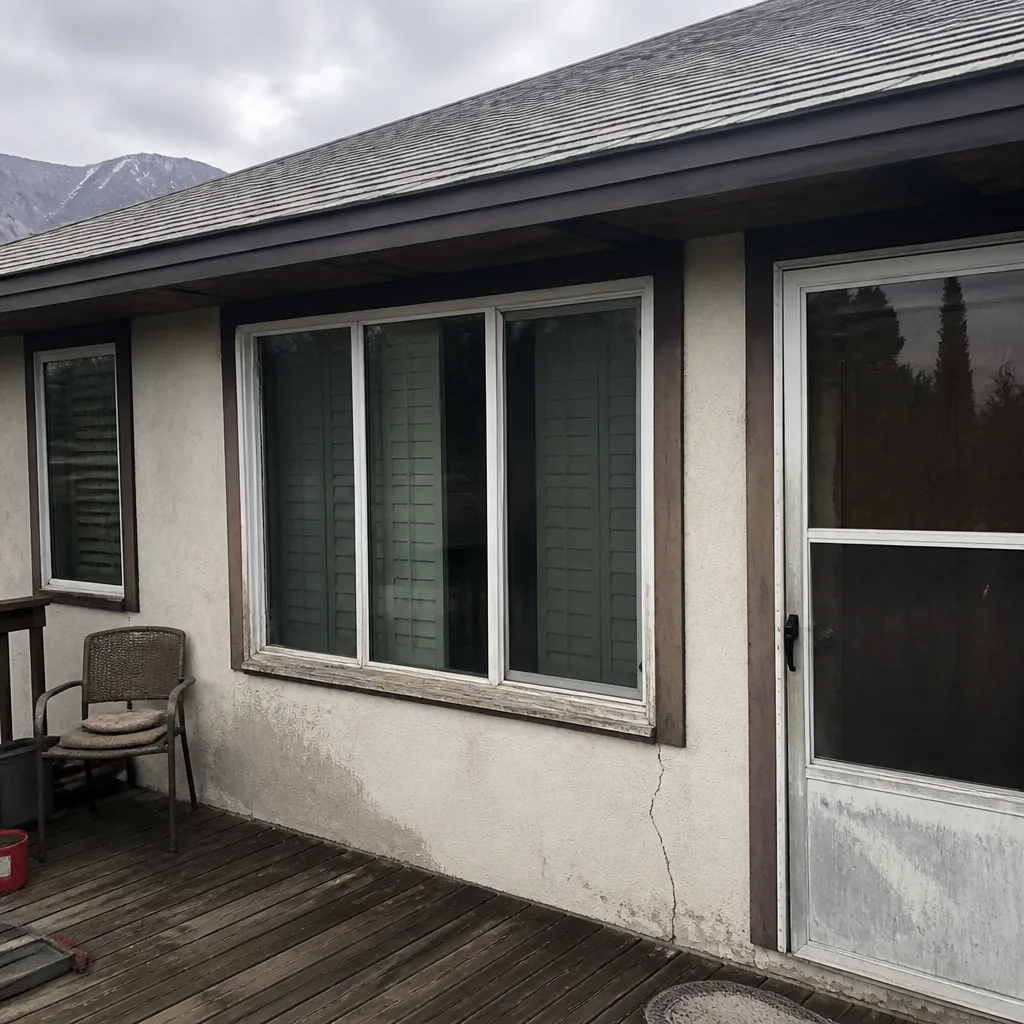 Before
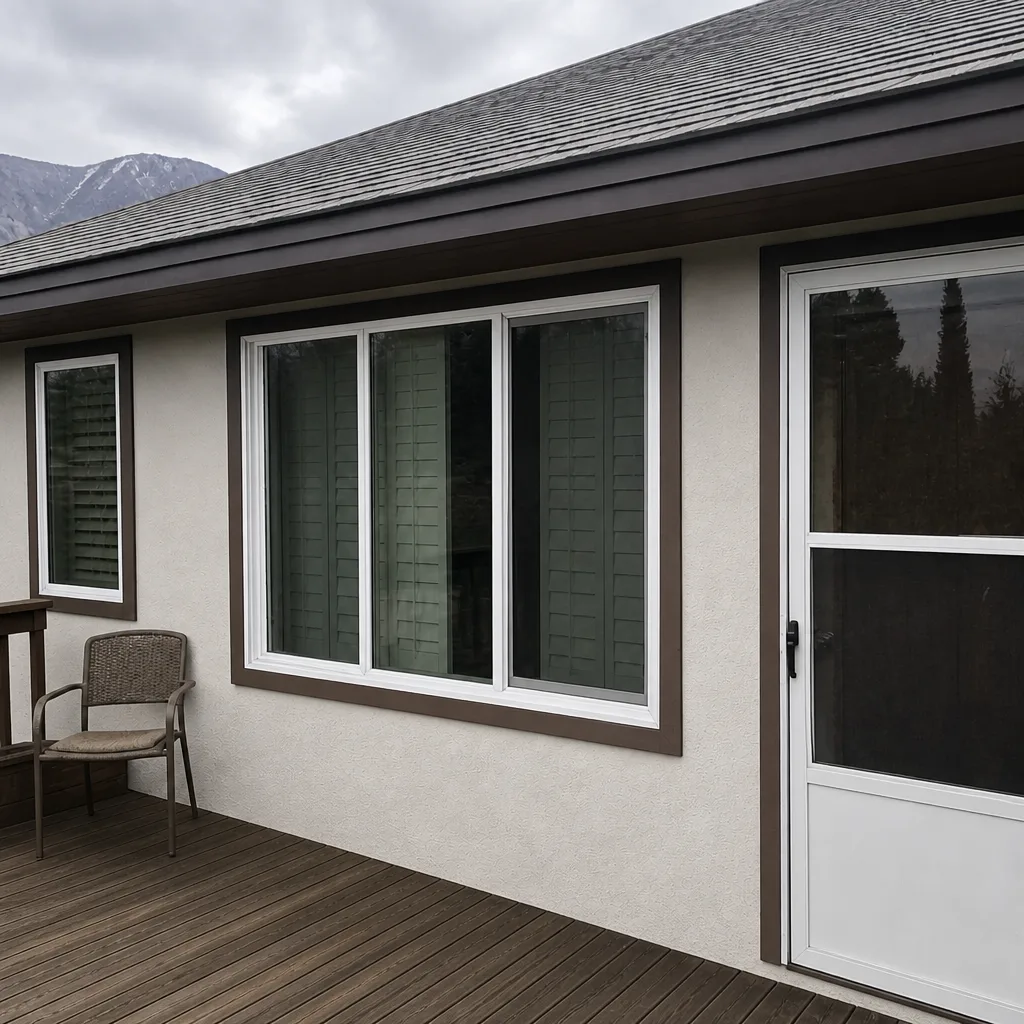 After
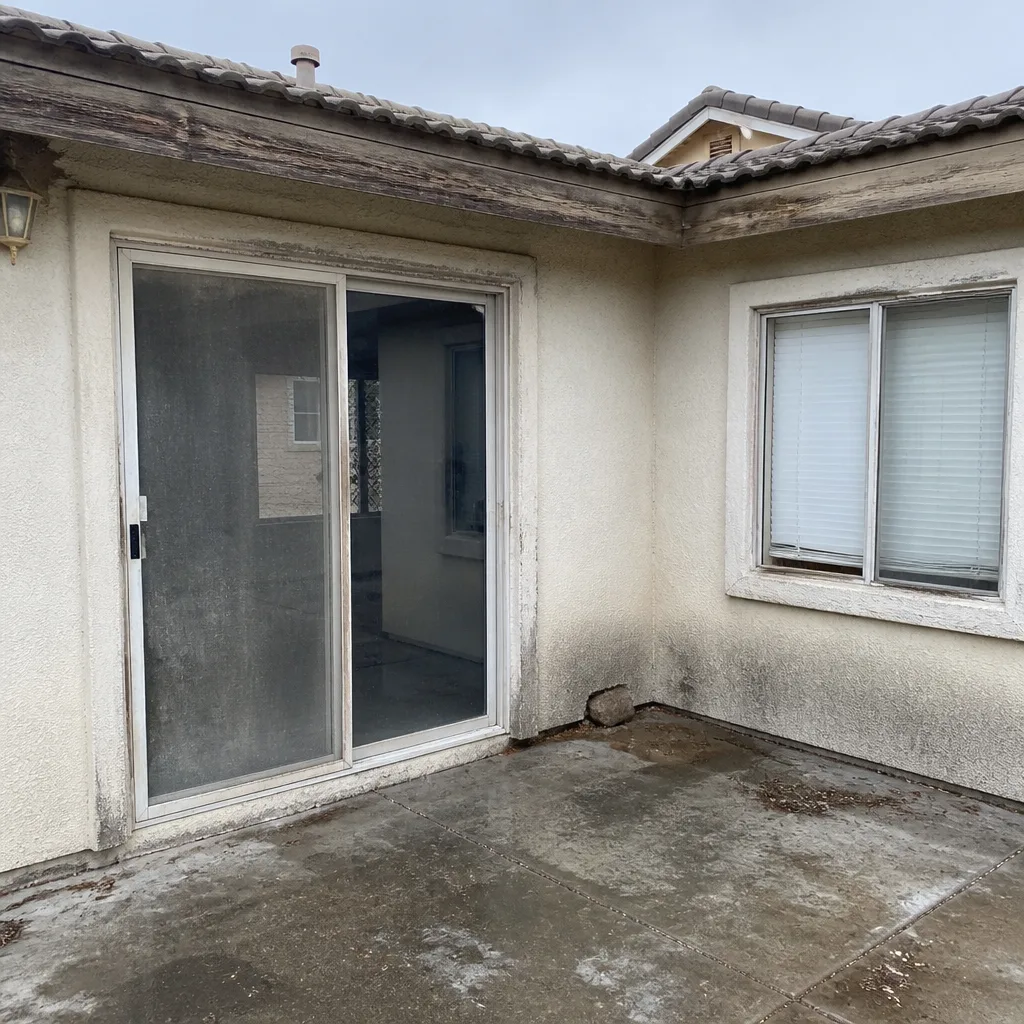 Before
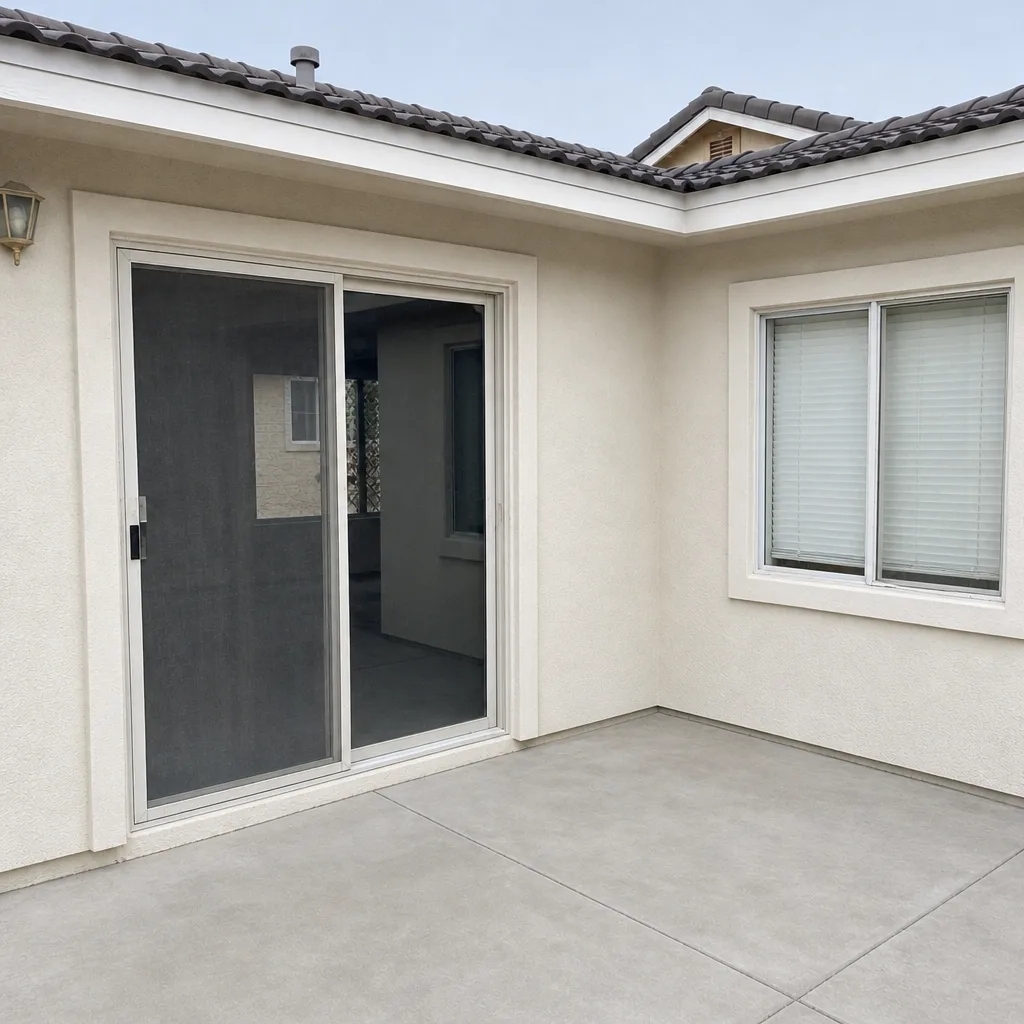 After
When to Call a Professional
Most of the routine is yours to handle, but a few situations call for a licensed installer rather than a tube of sealant from the garage. Call us if you spot fog or water between the panes of a dual-pane unit, if the frame-to-wall junction shows any gap or water intrusion, if a window won’t latch fully no matter how much you lubricate it, or if the weatherstripping has shrunk or cracked in a way that leaves a draft. Get a second opinion before you accept a big-box quote on a failed unit – the fix is sometimes smaller than it looks. Winslow Windows & Doors Whitney offers free estimates in Whitney – call (844) 797-3297 to schedule a walkthrough, and we’ll tell you honestly what’s owner-safe and what needs our hands on it.
Frequently Asked Questions
Twice a year is the baseline, plus a quick rinse after any heavy dust event or pool use. Clean in the early morning or evening when the glass isn’t hot to avoid streaks and residue baking on. Use only mild soap and water – never ammonia-based cleaners or abrasives. Call (844) 797-3297 if you’re unsure which products are safe for your specific frames.
You can handle seals on the glazing and weatherstripping, but leave the frame-to-rough-opening junction to a licensed installer. That junction is a critical weather barrier, and the wrong sealant or prep can trap moisture and void the manufacturer’s warranty. The professional should be licensed and insured as the state requires. Call (844) 797-3297 to get an accurate assessment of what needs professional resealing.
Look for fog, haze, or water droplets between the panes – not on either outer surface. In Whitney, because the air is dry, also check for uneven condensation during cooler months and feel for unusual heat radiating from the interior glass on summer afternoons. Any of those signs points to a failed seal. Call (844) 797-3297 for a free assessment before it becomes a full unit replacement.
A fogged dual-pane unit means the sealed space has failed and moist air is getting in. Common causes are aging glazing seals, windblown grit grinding down the seal over time, and UV degradation of the sealant. Once moisture gets in, the seal won’t recover on its own and the unit needs replacement. Early detection is the difference between a covered replacement and an out-of-pocket one. Call (844) 797-3297 if you spot fogging.
Yes – the dry, dusty, high-UV environment means seals and hardware need attention sooner than in milder climates. Plan on quarterly grit inspections, twice-yearly lubrication, and annual seal checks. Clean glass in early morning or late evening so soap doesn’t bake on. Our experience with brands like CGI and ES Windows is that a consistent 90-minute yearly routine keeps everything within spec. Call (844) 797-3297 for a checklist walkthrough tailored to your home.
Maintenance can protect or void your warranty depending on what you do. Following the manufacturer’s cleaning and inspection guidelines preserves coverage. Using wrong cleaners, scraping the frame, or improperly resealing the frame-to-wall junction gives the manufacturer grounds to deny a claim. Keep records of your routine and call (844) 797-3297 if a repair might be warranty-related.
The Bottom Line
Impact windows earn their keep only if the soft parts – seals, gaskets, hardware – are cared for. In Whitney, desert sun, dry air, and windblown grit accelerate wear on all of them, which is why a simple 90-minute yearly habit matters more here than almost anywhere. Stick to mild soap and water, inspect seals quarterly, lubricate hardware twice a year, run the fog and thermal tests, and leave the frame-to-wall resealing to a licensed installer. Do that, and a 30-year window actually lasts 30 years. Winslow Windows & Doors Whitney stands behind this work with our 36500-Day Done Right Promise – if it’s not done right, we make it right.
We’re the one down the road, locally owned and owner-operated, with each local pro licensed and insured as the state requires. Whether you need a maintenance walkthrough, a seal check, or a full look at what’s failing on your impact units, our Impact Windows in Whitney page is available, and we answer the phone live around the clock.
Call (844) 797-3297 for a free estimate and a straight answer on what your windows actually need. No trip charge inside the home county, and a second opinion on any written estimate is always free.
Written by the team at Winslow Windows & Doors Whitney.