
Last updated November 18, 2026
 Sliding glass doors
 Single hung
 Double hung
 Horizontal roller
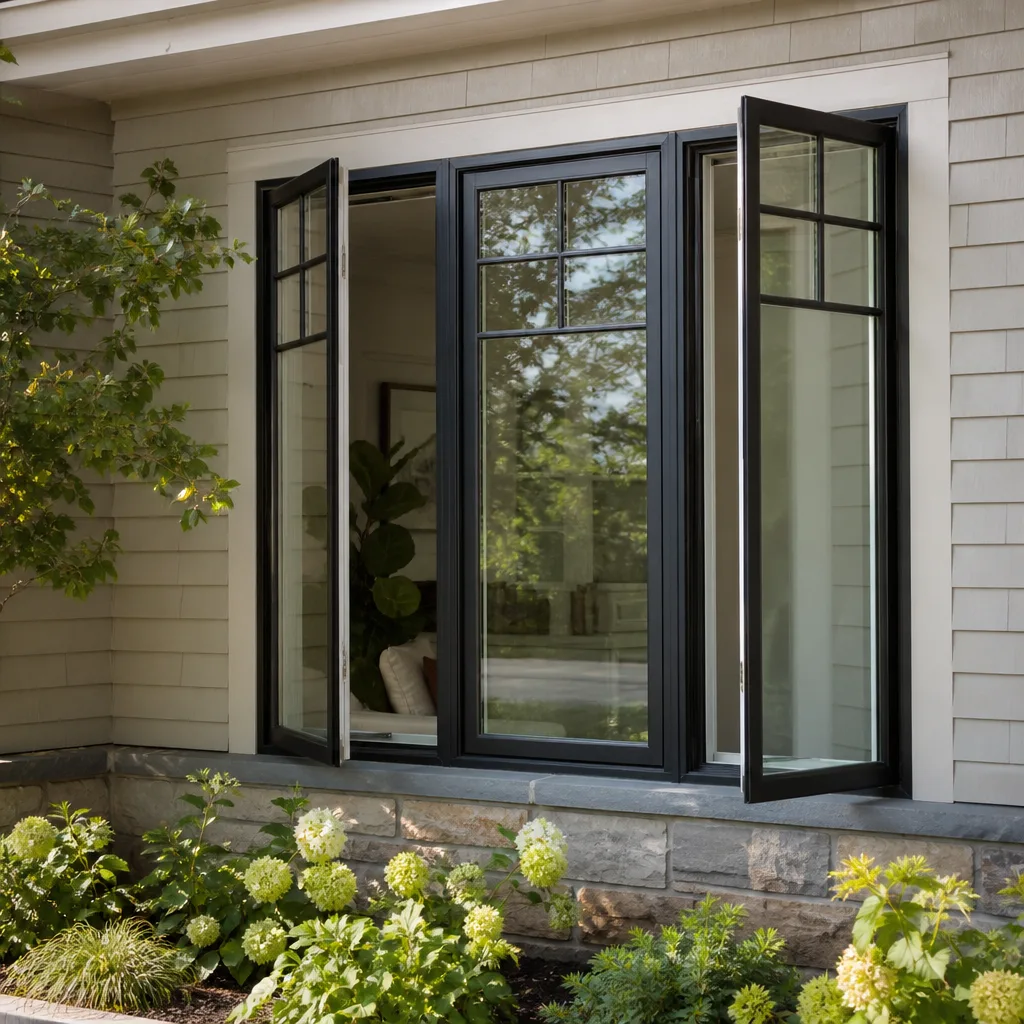 Casement
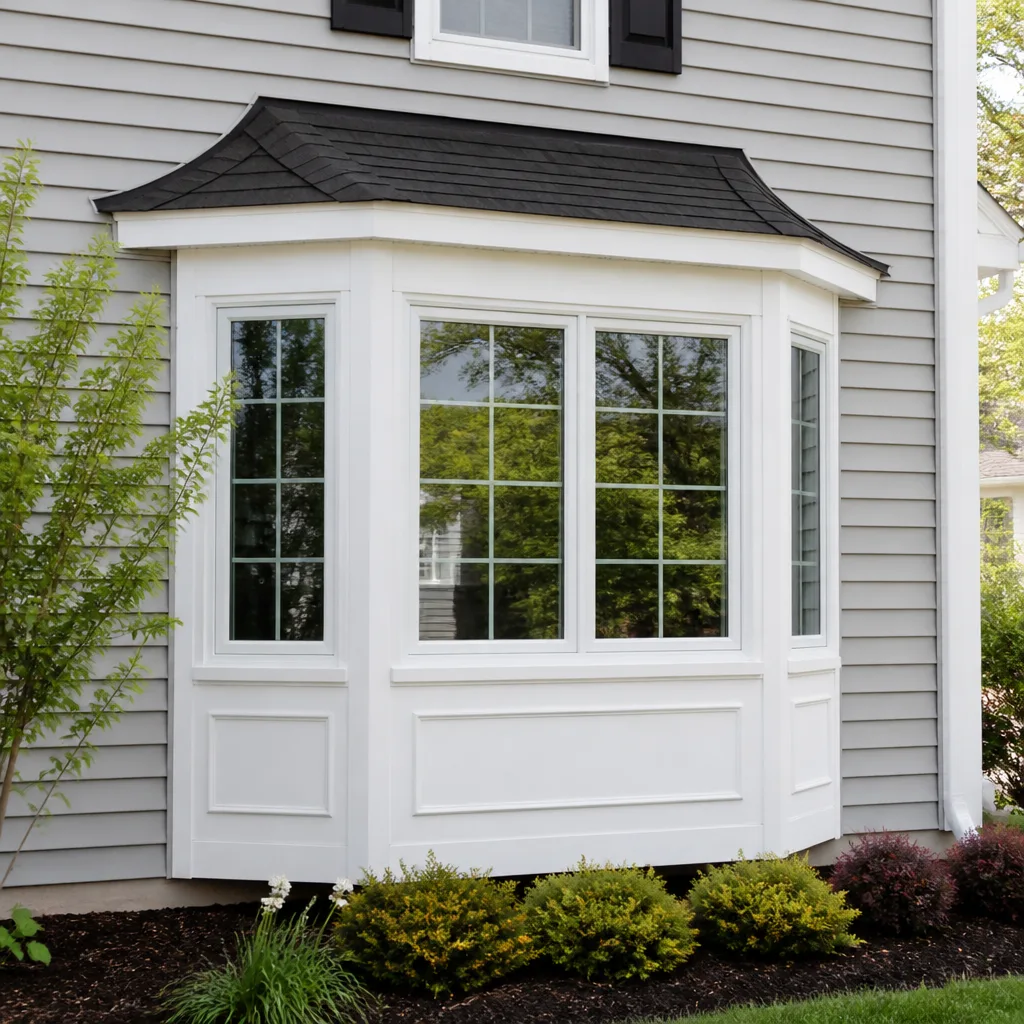 Bay & bow
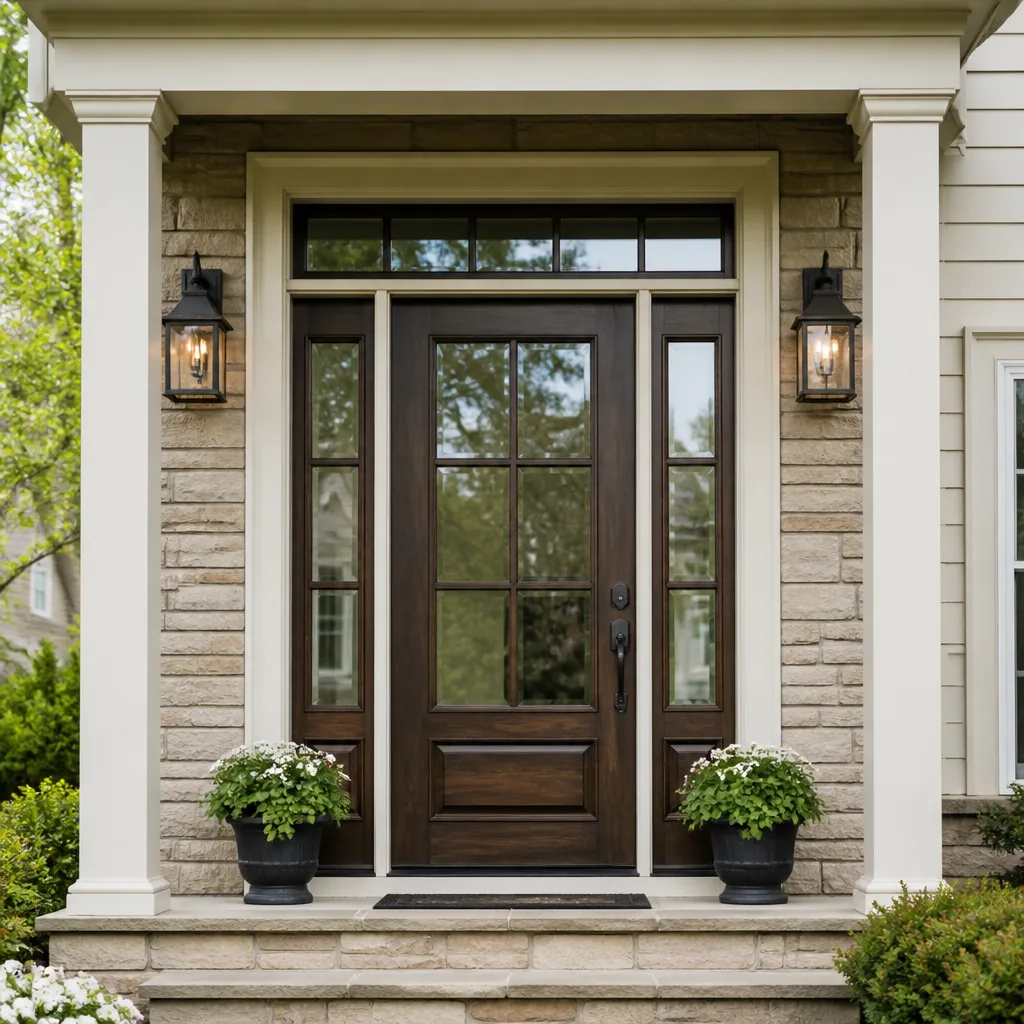 Entry doors
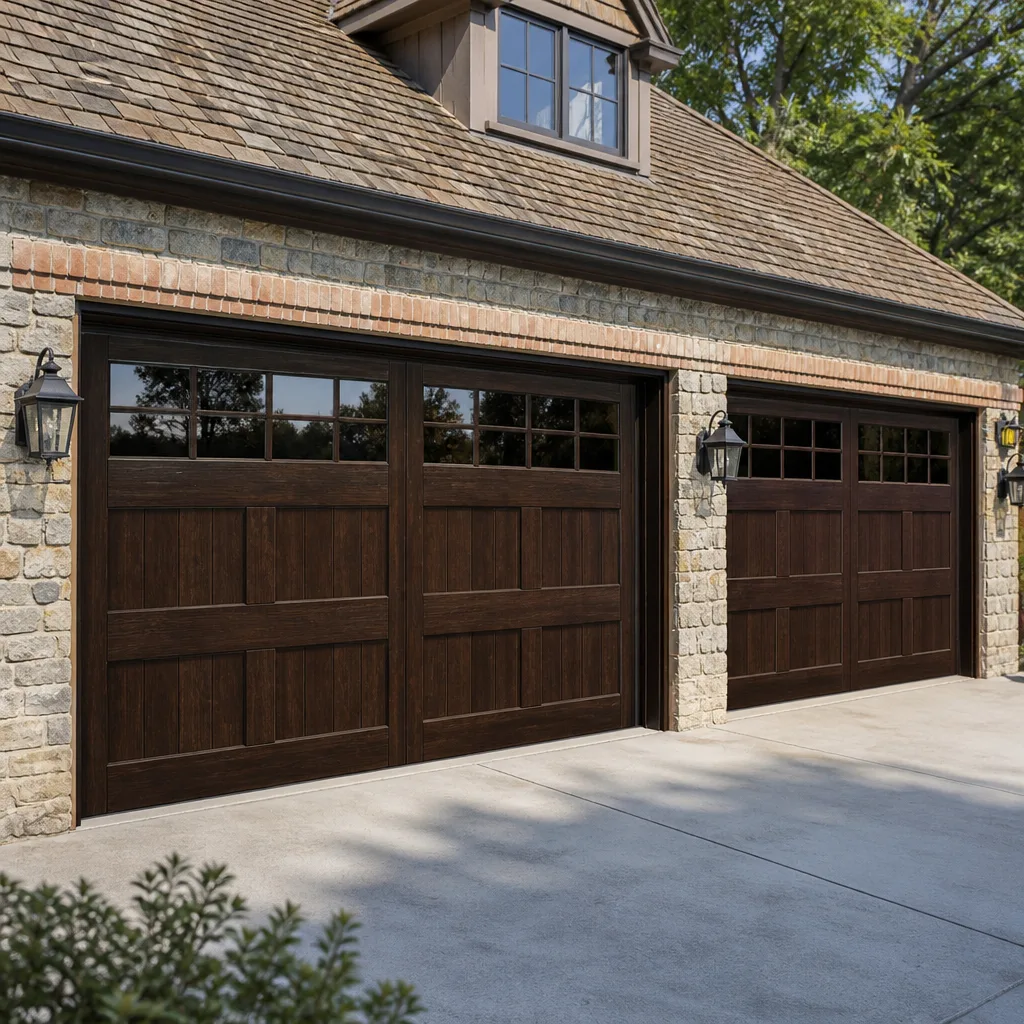 Impact garage doors
 PGT
 CGI
Free in-home measure and quote - PGT, CGI and CWS impact lines compared on your actual openings, style by style
Get your free estimateDIY vs Professional Windows & Doors: The Whitney Homeowner’s Decision Guide
Here’s a scenario we’ve watched play out more than once in the Las Vegas Valley. A homeowner finds a spotless window installation video on YouTube, buys a decent vinyl unit from a big-box store, and installs it himself over a weekend. The work looks clean. Then, two summers later, water gets behind the frame, the wall sheathing softens, and the insurance adjuster asks one question that ends the conversation: “Was this permitted?” In Nevada, an unpermitted install can disqualify a claim for water intrusion damage, not because the work was bad, but because it was legally unpermitted. That single distinction reframes the entire DIY-versus-professional debate. This guide will walk you through licensing thresholds, desert-specific installation tolerances, the real compounding cost of a failed install, and a decision matrix you can run against your own situation in Whitney.
Quick Answer
For most Whitney homeowners replacing windows or doors, professional installation is the safer call because Nevada licensing thresholds, manufacturer warranty terms, and desert-specific installation tolerances (especially expansion gaps for vinyl frames in 110°F heat) make owner-installed work a legal and financial gamble rather than a simple skill question. A skilled DIYer can reasonably handle interior trim, hardware swaps, and caulk touch-ups. Anything involving the rough opening, the frame itself, or the exterior seal belongs with a licensed, certified installer.
Styles & brands we work with
- Single hung
- Double hung
- Horizontal roller
- Casement
- Bay & bow
- Sliding glass doors
- Entry doors
- Impact garage doors
- PGT
- CGI
Table of Contents
- When Does Nevada Law Require a Licensed Contractor?
- What a Skilled DIYer Can Legitimately Own
- Desert Climate Changes the Installation Rules
- Warranty Validity: The Hidden Trap
- The Real Cost of a DIY Install Gone Wrong
- The Four-Variable Decision Matrix
- Permits, Inspections, and Your Insurance
- What This Means in Whitney Specifically
When Does Nevada Law Require a Licensed Contractor?
The Nevada State Contractors Board (NSCB) draws a specific line that most homeowners never hear until it’s too late. You can legally perform work on your own primary residence without a contractor license, but that exemption has edges. Cross any of them and you’re either violating state law or disqualifying yourself from protection you paid for.
Here’s where the exemption typically ends:
- You’re doing work on a property you don’t occupy. A rental, a flip, or a second home doesn’t qualify for the owner-builder exemption in the way most people assume.
- The work requires a permit and you pull it as an owner-builder with intent to sell within a year. Nevada’s owner-builder rules tighten considerably when a sale is on the horizon.
- The scope crosses into structural modification. Enlarging a rough opening, adding a new opening in a load-bearing exterior wall, or altering framing to accommodate a different window size typically triggers engineering and permit requirements.
- HOA or municipal requirements override the state exemption. Many Whitney-area HOAs and the local building department require a licensed contractor on any exterior envelope work, regardless of what the state allows for owner-builders.
We’ve seen homeowners assume “I’m doing it myself, so I don’t need a permit.” That’s not how the building department sees it. If the work involves cutting into the building envelope, structural framing, or a change to the egress path (which window replacement sometimes affects), the permit obligation stands whether or not a contractor is involved. And once a permit is pulled as an owner-builder and the work fails an inspection, the correction path is often more expensive than the original professional quote would have been.
The practical rule: if the job touches framing, the building envelope beyond a straight swap, or anything the local inspector needs to sign off on, hire a licensed contractor. The NSCB maintains a free license lookup that takes about thirty seconds.
What a Skilled DIYer Can Legitimately Own
Not every window and door task belongs in professional hands. Being clear about this builds trust in the advice. Some work is genuinely within reach for a careful homeowner with reasonable tools, and doing it yourself saves real money without any legal or warranty downside.
Tasks a capable DIYer can typically handle:
- Interior trim and casing. Pulling and re-installing interior trim after a pro install, or replacing worn casing on existing windows. No envelope risk, no permit requirement.
- Hardware swaps. Replacing door handles, locksets, hinges, and window latches. Straight hardware swaps don’t void warranties and don’t touch the frame seal.
- Caulk touch-ups and weatherstripping. Re-caulking the interior bead around a window, replacing worn weatherstripping on an existing door, or refreshing the threshold seal. Regular maintenance, not installation.
- Touch-up paint and finish work. Post-install cosmetics. Our technicians leave a clean job, but if you want to match paint exactly, that’s yours to own.
- Screen replacement and cleaning. Rescreening, glass cleaning, and track cleaning on sliding doors. Pure maintenance.
Notice what’s not on that list: anything involving the rough opening, the flashing, the frame anchoring, the exterior seal, or the sill pan. Those tasks are where installation failure actually happens, and they’re also where warranty language gets very specific about who can perform the work. If you want a deeper walkthrough of what a professional install involves, Window Installation in Whitney covers the full sequence from demo to final inspection.
In our experience, the homeowners who get the best outcome do their own trim and paint, then hire out the water-sealing work. That split captures the savings without carrying the risk.
Desert Climate Changes the Installation Rules
This is where most YouTube guides quietly fail. A window install tutorial filmed in the Pacific Northwest or the Midwest follows installation tolerances that assume a mild climate. Whitney sits in a desert where exterior surfaces routinely exceed 150°F in direct summer sun, and where the daily swing in the cooler months can hit 40 degrees. Vinyl frames expand and contract on a different curve than the guides show.
Three ways desert installation differs from what you’ll see online:
- Expansion gaps are larger and non-negotiable. Vinyl window frames need a shim-and-gap allowance sized for the local temperature range. A guide filmed in a mild climate may show 1/8″ to 1/4″ allowance; in Whitney’s summer heat, the requirement is more generous, and installing tight “to look clean” is a common DIY outcome that leads to frame buckling and seal failure by the second or third summer.
- Flashing and sill pan detailing are more critical, not less. Desert rain arrives in concentrated monsoon bursts rather than gentle drizzles. A slightly imperfect exterior seal in a wet climate fails slowly. Here it fails the first time a monsoon pushes water sideways against a window during a wind-driven storm.
- UV exposure accelerates sealant degradation. Exterior caulk that would last five years in a mild climate can degrade in two or three under Nevada UV. Manufacturers specify UV-rated sealants and specific application methods; using the wrong product because it was on the shelf shortens the seal’s life dramatically.
This matters because the failure mode is delayed. A DIY install that cuts corners on expansion gap won’t fail on install day. It’ll fail on the first 105°F afternoon after the frame has fully expanded two summers later. By then, interior finishes may have already taken water damage. If your home has large south- or west-facing windows (common in Whitney’s newer tract builds), the UV and thermal load on those units is the highest in the house.
For a deeper dive on how climate-specific products interact with installation, our Impact Windows in Whitney page covers the impact-rating and thermal-performance side in detail.
Warranty Validity: The Hidden Trap
Every major window and door manufacturer writes installation requirements into its warranty terms. These aren’t marketing fluff. They’re enforceable conditions that determine whether you get a replacement unit for free or pay full price for a new one.
The patterns we see across the brands we install, including ECO Window Systems, Mr-Glass, Therma-Tru, and ViewLux, look like this:
- Certified installer requirements. Some product lines require installation by a factory-certified installer to keep the full warranty intact. If the homeowner installs the unit, the coverage often drops to a limited “product only” warranty that excludes labor and may exclude water intrusion damage entirely.
- Specific installation method mandates. Manufacturer installation manuals specify flashing method, fastener type, sill pan construction, and expansion gap sizing. Documented deviation from the manual is grounds for denial.
- Proof-of-installation requirements for claims. When a water-related warranty claim is filed, manufacturers typically ask who installed the unit and how. A homeowner install with no paper trail is a hard claim to win, even if the install was actually correct.
- Combined product-and-labor coverage. The most valuable warranty tier usually pairs the product with the installation labor. That tier almost always requires a professional installer.
The bottom line: a factory warranty on a $600 window is worth real money, and a DIY install can quietly reduce it to near-worthless. Warranty validity belongs in the first five minutes of the DIY-versus-pro decision, not at the end.
The Real Cost of a DIY Install Gone Wrong
Homeowners typically think of the cost of a failed install as “I have to redo it.” That framing undercounts the actual exposure by a wide margin. The redo cost is the smallest number in the equation.
Here’s the compounding picture we’ve seen in real Whitney cases where a rough opening seal was compromised:
- Month 1 – 3: The install looks fine. No visible signs. The failure is behind the frame.
- Month 4 – 9: The first monsoon season. Water enters at the flashed joint and begins saturating the sheathing. No visible interior clue yet because the wall assembly absorbs it.
- Month 10 – 15: Interior symptoms appear. Paint bubbles on the interior drywall near the window, baseboard stains appear, or a faint musty smell develops. The homeowner notices the problem but attributes it to humidity or plumbing.
- Month 15 – 18: Framing damage is measurable. At this point, the water has been working on the wall framing for over a year. Softened framing, mold in the wall cavity, and damaged insulation are common findings. Repair scope has expanded from “reseal the window” to “replace framing, insulation, drywall, and finish.”
- Month 18+: The insurance claim question. If the claim is filed, the adjuster asks the permitting question. If the install was unpermitted, the claim may be denied on the grounds that the damage stems from unpermitted construction. The homeowner pays out of pocket for everything above, including the window itself, which likely isn’t covered under warranty due to the DIY install.
The gap between a professional install and a DIY failure is often measured in thousands of dollars, not hundreds. A $200-per-window professional install fee against a $6,000 to $12,000 remediation is a very different math problem than “the pro was $200 more per window.”
We see this on the repair side as well. Roof-related water intrusion follows the same pattern, and the same permits-and-warranty math applies. Homeowners sometimes come to us for a second opinion after paying for a DIY-driven remediation once already.
The Four-Variable Decision Matrix
Whether DIY is actually viable for your Whitney home isn’t a general question. It’s a specific one, and it comes down to four variables that interact with each other. Run your own situation against this matrix.
| Variable | If this is true | If this is not true |
|---|---|---|
| Home sale within 5 years | Professional install. Unpermitted work discovered in a buyer’s inspection can kill a sale or force a credit larger than the install cost. | DIY may be viable for maintenance-scope tasks only. |
| Insurance coverage requirements | Check your policy. Many Nevada homeowners’ policies require permitted work for water-related claims. | Confirm in writing before assuming DIY is safe. |
| Product warranty terms | Professional install if the warranty requires a certified installer. | DIY may retain product-only coverage. |
| Permit obligation | If a permit is required, use a licensed contractor to pull it and perform the work. | Permitted-exempt maintenance tasks are within DIY reach. |
Here’s how to read the matrix in practice:
- All four “true” (sale soon, coverage concerns, warranty-conditions, permit required): Professional install is the only path that doesn’t carry hidden liability.
- Two or three “true”: Lean professional. The variables interact, and the failure cost is asymmetric.
- One “true”: Depends on which one. A permit obligation alone is enough to require a licensed contractor.
- None “true”: DIY is viable, but only for the maintenance-scope tasks listed earlier, not rough-opening or envelope work.
If you’re unsure on any single variable, that’s the cue to call. Our Window Replacement in Whitney team can walk through your specific situation, including what the local building department requires for your address, and a free second opinion on any written estimate you already have is one of our standing offers. For the broader menu of what we handle, see the Winslow Windows & Doors Whitney home page.
Permits, Inspections, and Your Insurance
The permit question is where the DIY decision becomes strictly financial rather than philosophical. This isn’t about craftsmanship pride. It’s about whether the work is legally recognized, insurable, and transferable when the house is sold.
What a permitted installation actually delivers:
- An inspection record. The building department signs off. That record becomes part of the property history and shows up in a buyer’s title or inspection review as completed and compliant work.
- Insurance coverage continuity. Most homeowner policies presume permitted work. Unpermitted improvements create a coverage gap that only shows up when a claim is filed.
- Resale protection. An unpermitted window install is a disclosure item. Depending on how the buyer’s lender treats it, it can delay closing, require a holdback, or kill the deal outright.
- Manufacturer warranty standing. Many warranty claims are denied when permit records don’t match the installation.
We’ve seen homeowner-turnover inspections uncover decades-old unpermitted work and force six-figure corrections. Window and door replacement is a smaller scale, but the pattern is the same. An inspector finds a window that doesn’t match the permit history, and suddenly the sale is contingent on a licensed reinstall.
The professional path isn’t just about the installation. It’s about completing the paperwork, meeting the local inspector, and delivering a signed-off project. That’s the actual product you’re buying when you hire a licensed contractor.
What This Means in Whitney Specifically
Whitney is a community where these variables stack up against DIY more than in many places. A few specific factors make the professional path the safer default here:
- Newer housing stock with tight envelopes. Whitney has seen substantial residential development over the past two decades. Homes built in that era are tightly sealed, which means moisture that gets behind a seal has fewer ways out. A DIY installation flaw that would dry out in an older home can become a mold problem faster in this housing stock.
- HOA and municipal requirements. Many Whitney neighborhoods have HOA rules on exterior work that require licensed contractors and approval of product specifications before installation. If your HOA requires a licensed contractor and you install yourself, HOA violation exposure adds to the cost.
- Afternoon heat exposure. Whitney’s west- and south-facing windows take direct afternoon heat that’s harsh on vinyl and on sealant. Climate-specific expansion gap sizing and UV-rated sealants matter more here than in neighborhoods with more shade or heavier tree cover.
- Concentrated monsoon seasons. Water intrusion risk peaks in concentrated events. A window that’s been “fine for two years” is not evidence that the seal is working. It’s just evidence there hasn’t been a real test yet.
Our technicians have up to 15 years of experience with installations in this climate, including the expansion-gap requirements specific to Whitney’s temperature swings. We’ve been installing here since 2011, and the failure patterns are consistent enough that we can usually spot an upcoming problem in the visual inspection alone. Every quote is a written line-item quote. Every installation is done by background-checked, uniformed technicians, and every job is backed by the 36500-Day Done Right Promise: if it’s not done right, we make it right.
Common Mistakes to Avoid
- Trusting a nationwide YouTube tutorial for local installation tolerances. Climate-specific expansion gaps and flashing methods differ enough that a tutorial filmed in a mild climate is actively misleading for Whitney installs.
- Assuming the owner-builder exemption covers any work on your own home. It doesn’t, especially on rental properties, on sale-intent timelines, or where HOA rules require a licensed contractor.
- Skipping the sill pan because it “wasn’t there on the old window.” Older installs often omitted it. Modern flashing standards expect it, and omitting it on a Whitney install is one of the most common causes of slow water intrusion damage.
- Installing vinyl frames tight “for a clean look.” In 110°F Whitney heat, tight installs buckle on the frame’s second summer. The expansion gap is functional, not decorative.
- Using whatever exterior caulk is on the shelf. Desert UV eats through non-rated sealants in two to three years. The manufacturer-specified product matters, and it costs a few dollars more.
- Assuming warranty coverage survives a DIY install. Certified installer requirements are common on the product lines we handle, and a homeowner install quietly reduces the coverage you paid for.
- Skipping the permit because “it’s just a window.” Unpermitted work is a coverage gap and a resale landmine. The permit is what makes the work legally recognized.
See the difference
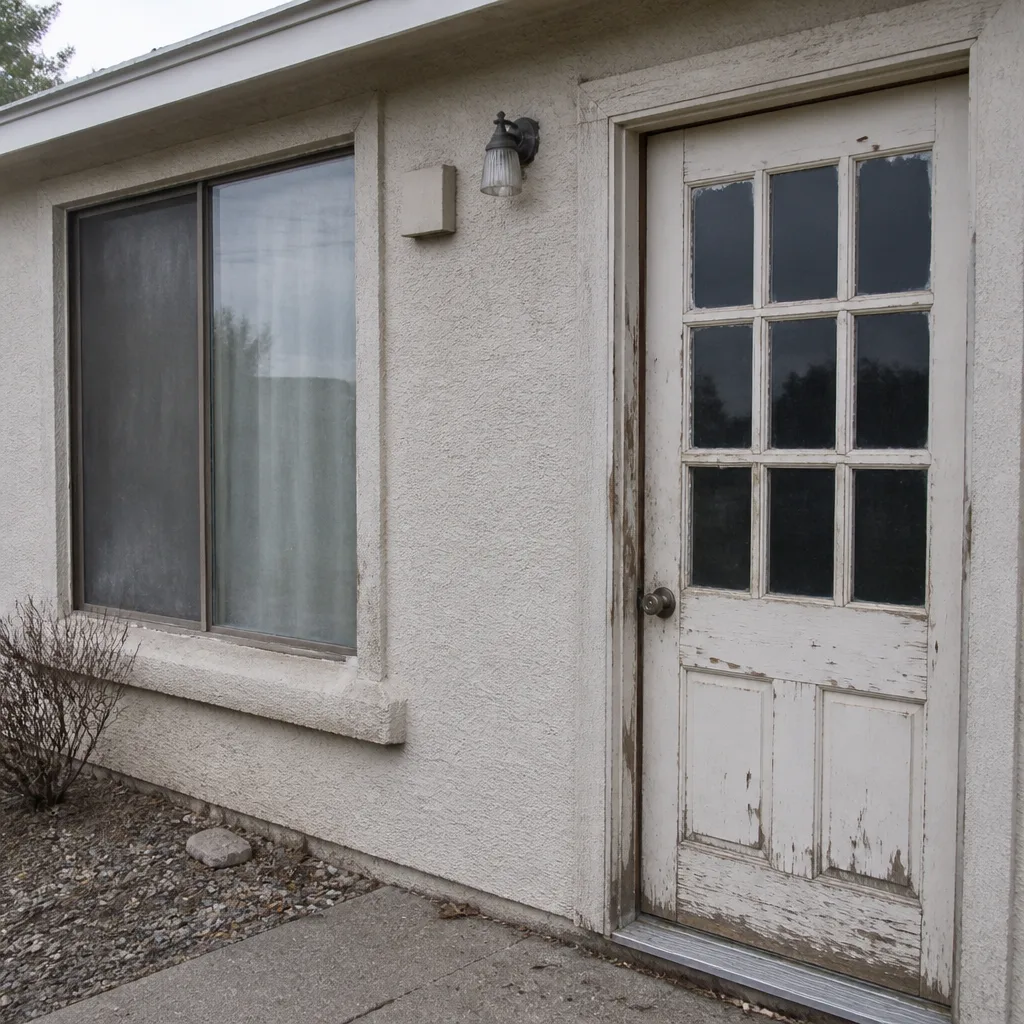 Before
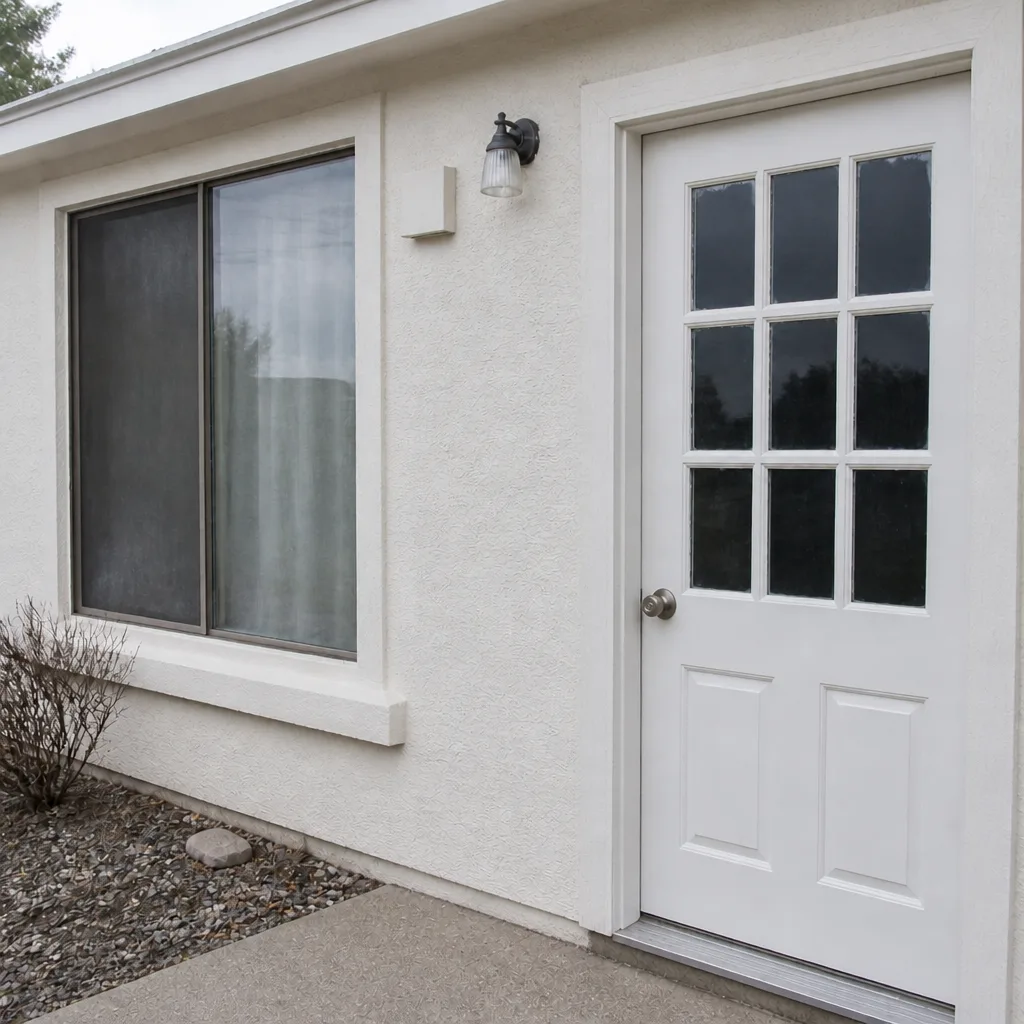 After
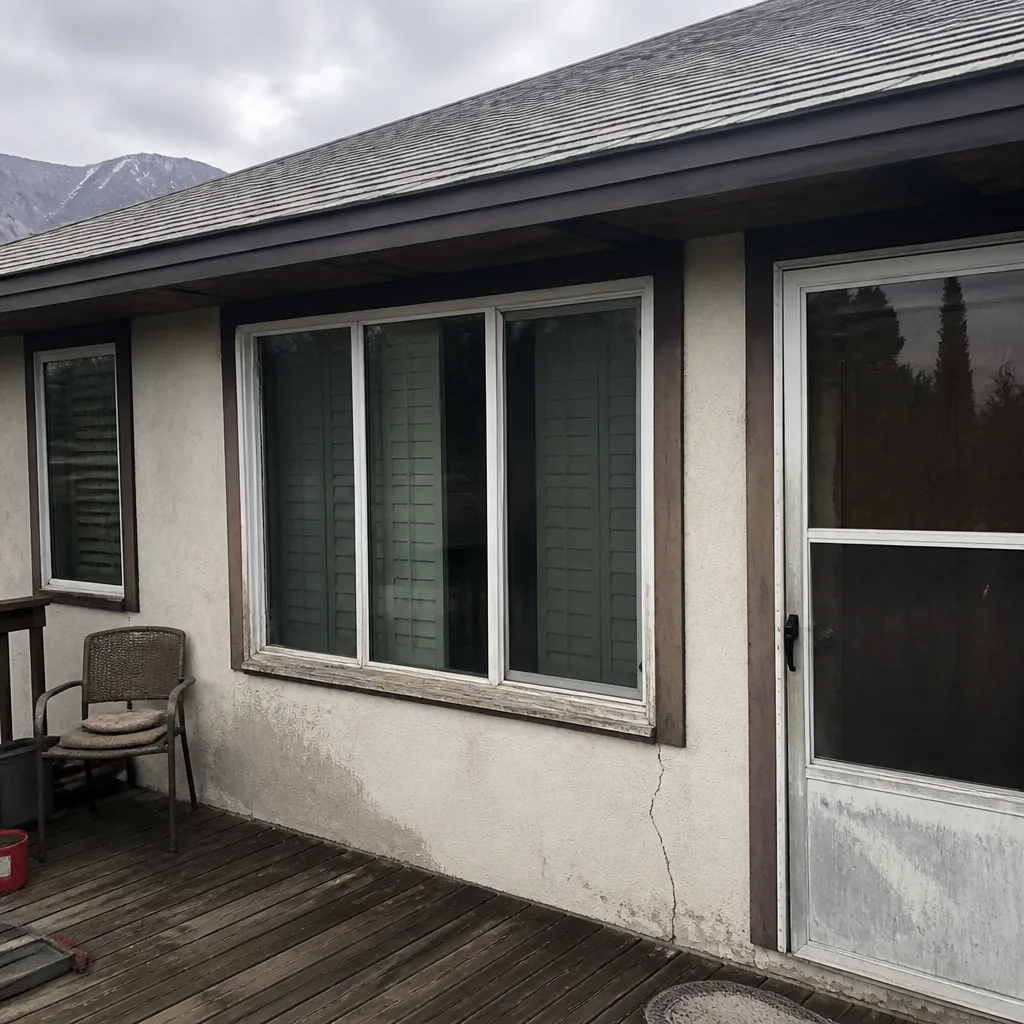 Before
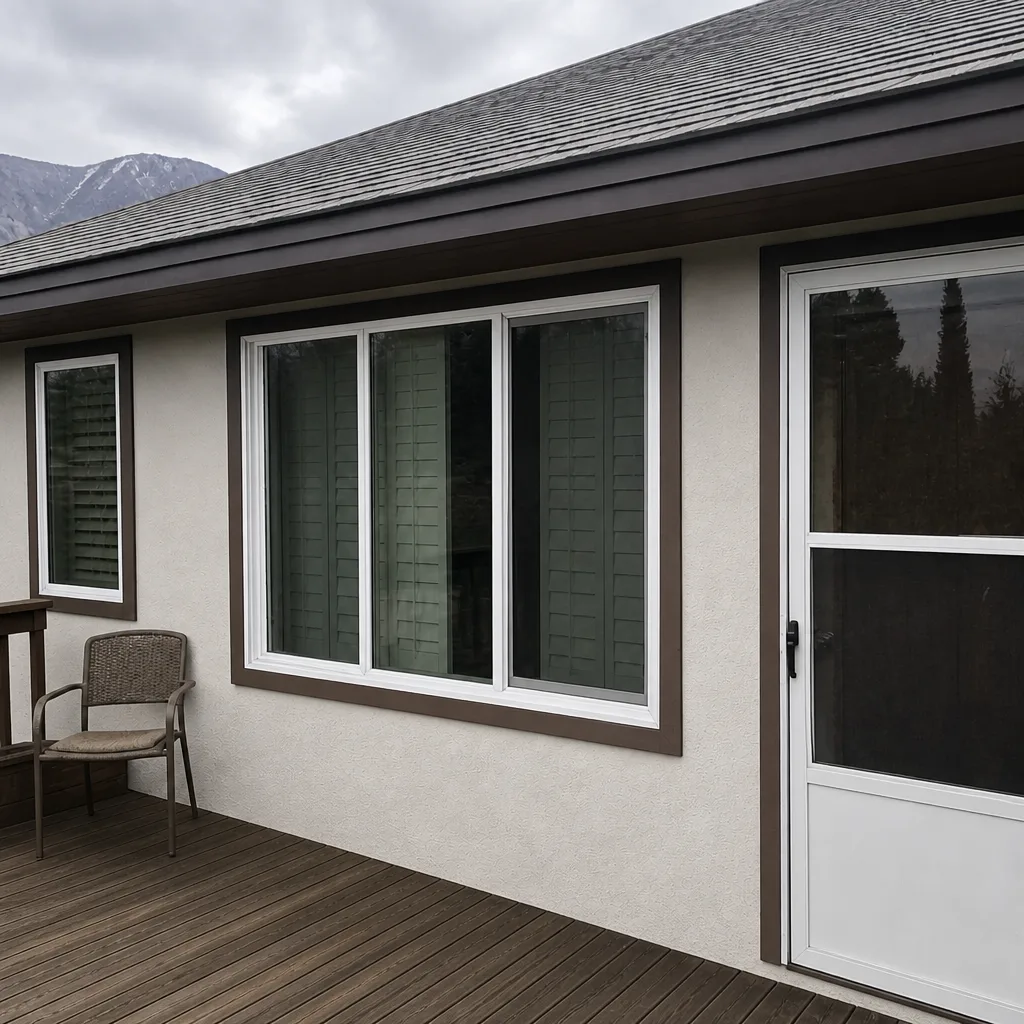 After
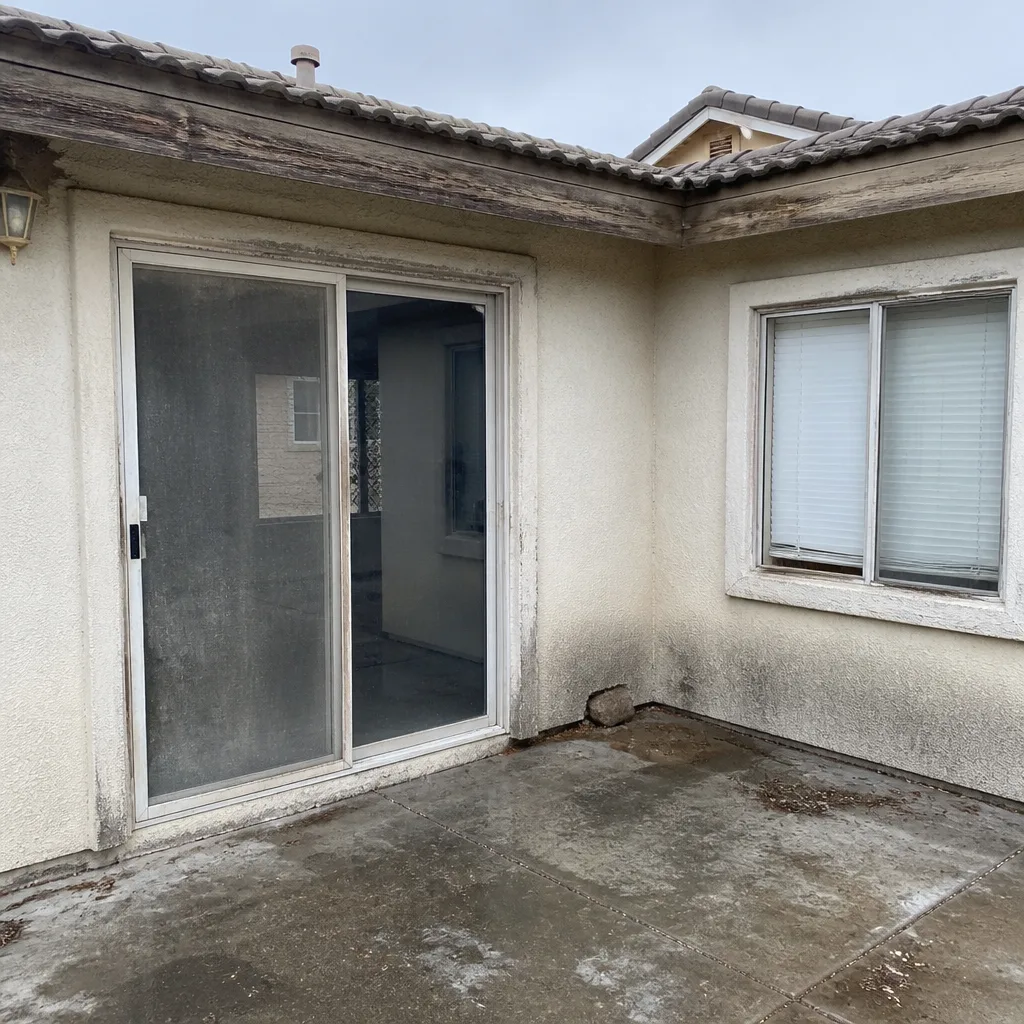 Before
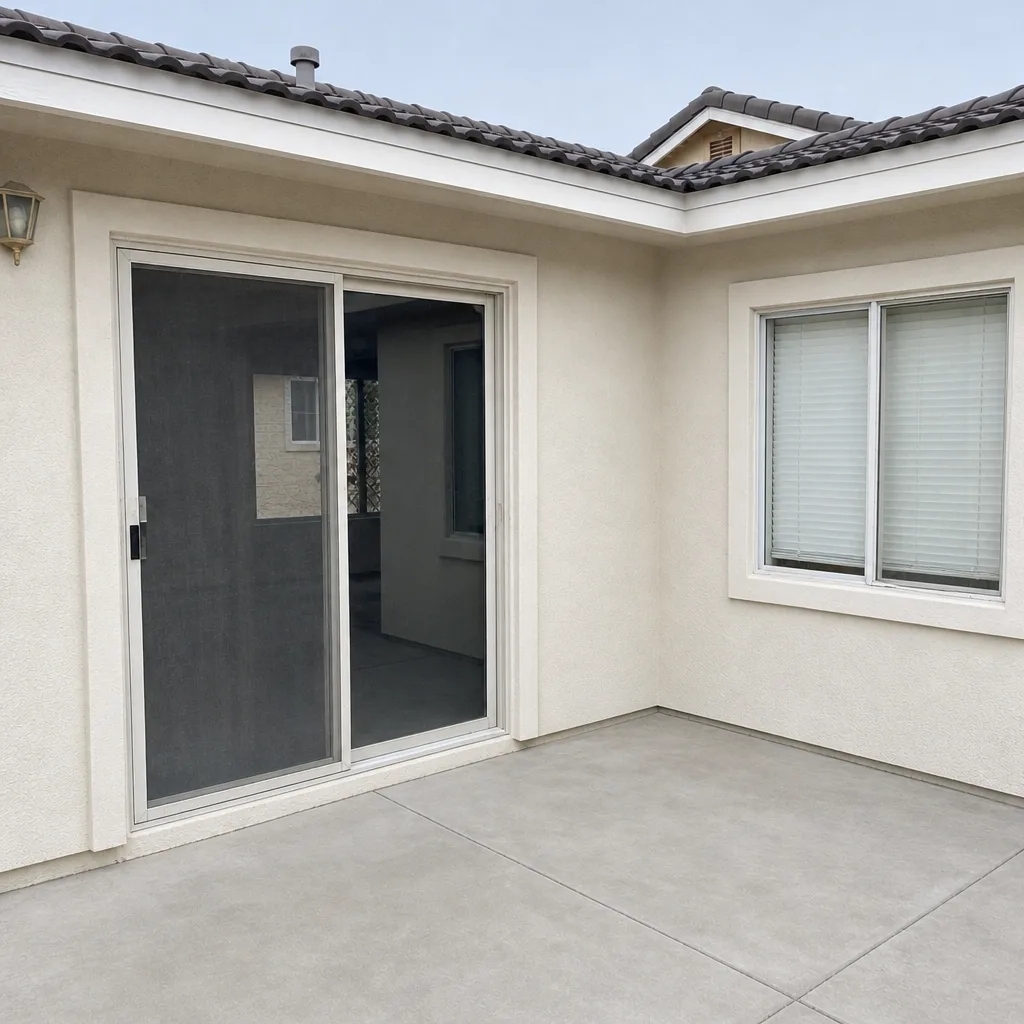 After
When to Call a Professional
Call a professional if any one of these applies: the work involves cutting a new opening, enlarging an existing opening, moving a window’s position, replacing a door that is part of an egress path, or dealing with any framing modification. Call if the product warranty requires a certified installer. Call if your HOA or the local building department mandates licensed contractor work on exterior envelope changes. Call if you plan to sell within five years. Call if your homeowners’ insurance policy has any language about permitted work. Call if you’re unsure on any single one of these points, because the failure cost is asymmetric. Winslow Windows & Doors Whitney offers free estimates in Whitney; call (844) 797-3297 to schedule yours. We’ll give you a written line-item quote, walk you through the permit process, and explain exactly what’s required for your specific address. No trip charge inside the home county, and a free second opinion on any written estimate you already have.
Frequently Asked Questions
Most Whitney window installations land in a range that depends on window count, window size, product tier (standard vs. impact-rated), and whether the rough opening needs modification. Expect a meaningful premium over a big-box DIY unit price, but the professional install fee includes the permit, inspection, warranty-valid installation, and cleanup. Call (844) 797-3297 for an exact quote; estimates are free, and we’ll give you a written line-item breakdown.
It depends on the scope. Simple maintenance swaps that don’t affect the building envelope or structural framing may not require a permit, but any work that touches the rough opening, structural framing, egress path, or building envelope typically does. The owner-builder exemption also tightens on rental properties and when you plan to sell within a year. Confirm the requirement with the local building department for your specific address, and confirm with your insurance carrier before proceeding.
Often yes, at least in part. Many manufacturer warranties require installation by a certified installer to keep the full product-and-labor coverage. A homeowner install typically reduces the coverage to a limited product-only warranty that excludes labor and, in some cases, excludes water-related claims. Read the warranty terms before deciding, and check whether the product line you’re considering requires a certified installer.
Delayed water intrusion behind the frame. An improperly flashed or sealed rough opening can stay hidden for 12 to 18 months while water damages the sheathing and framing. By the time interior symptoms appear, the repair scope has expanded beyond the window. The unpermitted-install insurance gap makes the financial exposure substantially larger than a typical redo cost.
Not on a Winslow quote. Every estimate is a written line-item quote, and if the scope doesn’t change once we open the wall, the price doesn’t change. If we discover hidden damage that requires a scope change (unusual, and typically discovered during demo), we stop and talk to you before proceeding. No change orders appear on your invoice without your approval first.
Yes. Permit pull, inspection scheduling, and any correction work belong to us as the licensed contractor. That’s the point of using a permitted professional on exterior envelope work. The permit record becomes part of your property history, supports insurance coverage continuity, and protects resale. Call (844) 797-3297 to discuss the permit requirements for your specific Whitney address; we’ll confirm what’s needed before the estimate is delivered.
The Bottom Line
For most Whitney homeowners, the DIY-versus-professional question has less to do with skill and more to do with compound risk. If you’re already qualified to install a window without triggering a permit, without voiding a warranty, without compromising the expansion gap for 110°F heat, and without creating an insurance gap, you probably already know it. For everyone else, the safer, cheaper, longer-lived path is professional installation by a licensed, certified contractor. The 20% of tasks you can genuinely own yourself (trim, hardware, caulk) stay in your hands. The 80% that carry the real risk belongs in ours. That split is what our technicians have up to 15 years of experience with, and it’s what the 36500-Day Done Right Promise is built around. If you’re not sure which side of the line your project sits on, call us. It’s a free estimate and a real person answers.
To schedule your free estimate, call (844) 797-3297. Winslow Windows & Doors Whitney is locally owned, owner-operated, and the one down the road. We install ECO Window Systems, Mr-Glass, Therma-Tru, ViewLux, and four more premium brands, and we back every job with the 36500-Day Done Right Promise: if it’s not done right, we make it right.
Written by the team at Winslow Windows & Doors Whitney.